
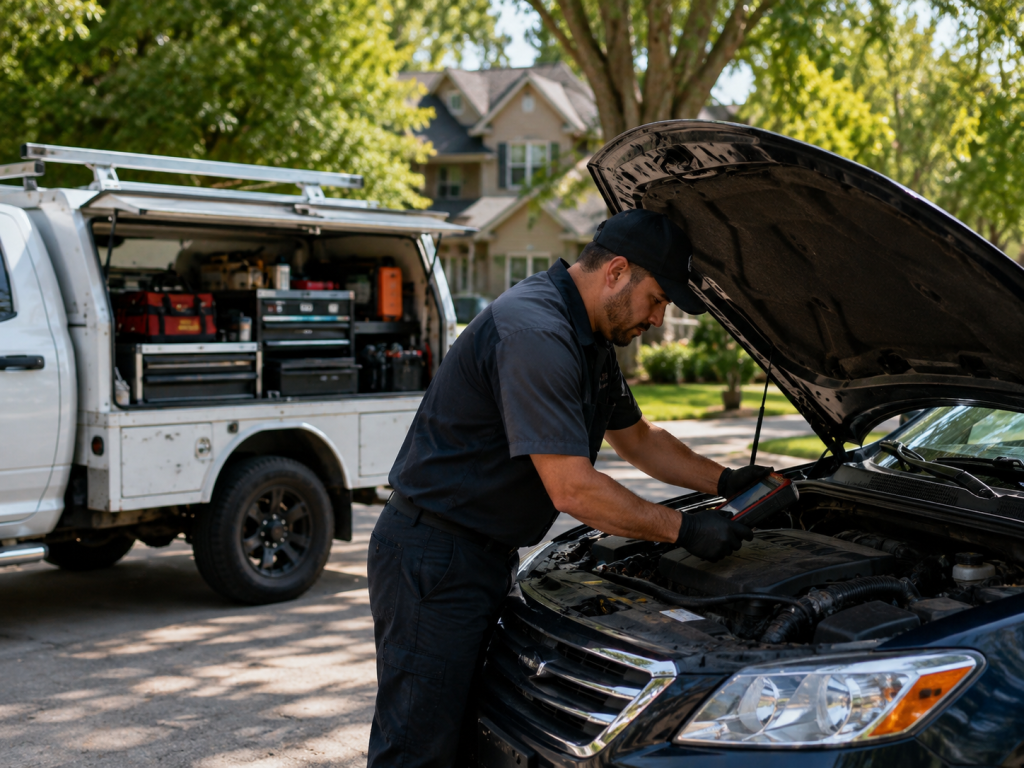
El Paso sits at the edge of the Chihuahuan Desert, and that geography shapes everything about how a vehicle ages here. Between intense, dry heat that regularly pushes past a hundred degrees during summer and the fine desert dust that gets kicked up during windy stretches, especially during the spring wind season that hits the region hard, El Paso vehicles face a combination of stresses that most drivers coming from a milder climate never fully anticipate. Two systems in particular bear the brunt of this environment, your air filters and your cooling system, and understanding how they interact here makes a real difference in avoiding a breakdown during the hottest part of the year.
Why El Paso’s Dust Is More Aggressive Than Typical City Dust
The fine, dry dust common to the Chihuahuan Desert behaves differently than the dust found in more humid climates. Without consistent moisture to weigh particles down, El Paso’s dust stays airborne longer and travels further during windy conditions, settling into every accessible opening on a vehicle, including the air intake, the radiator fins, and the cabin ventilation system. Spring windstorms in particular can blanket the entire region in a haze of dust that persists for hours, giving vehicles extended exposure well beyond what a typical dusty day elsewhere might produce.
How This Dust Clogs Air Filters Faster Than Standard Intervals Expect
Your engine air filter is designed to keep dust and debris out of the combustion process, but El Paso’s elevated ambient dust levels mean filters here reach their capacity considerably faster than manufacturer recommended replacement intervals assume. A clogged air filter restricts airflow to the engine, forcing it to work harder and often reducing fuel efficiency along with overall power, particularly noticeable during acceleration on routes like I 10 or Mesa Street.
Cabin air filters face the same accelerated clogging, which matters considerably in El Paso given how much your air conditioning system already has to work against the region’s extreme summer heat. A clogged cabin filter reduces airflow through the ventilation system right when you need strong air conditioning performance most, creating a frustrating combination of reduced cooling comfort during the hottest stretches of the year.
Why Dust And Heat Combine Against Your Cooling System Specifically
This is where El Paso’s climate creates a particularly difficult combination. Radiators rely on airflow moving across their fins to dissipate heat effectively, and desert dust settling into these fins over time reduces that airflow, much like a filter that has become clogged. A radiator coated in accumulated dust simply cannot shed heat as efficiently as a clean one, and this reduction in cooling capacity happens gradually enough that many drivers do not notice it until the hottest days of summer expose the weakness all at once.
The timing here could not be worse. El Paso’s most intense heat arrives during the same months when dust exposure has often had the longest time to accumulate on radiator fins since the last thorough cleaning, meaning a cooling system already working at reduced capacity is asked to perform its hardest job of the year at exactly the moment it is least equipped to do so.
Warning Signs This Combination Is Affecting Your Vehicle
A few signs suggest dust and heat are working together against your vehicle. Reduced fuel efficiency or a noticeable loss of power that does not have another obvious explanation often points to a clogged engine air filter. Weaker airflow from your air conditioning vents, even when the system otherwise seems to be running, can indicate a clogged cabin filter reducing overall ventilation performance.
A temperature gauge that runs a bit higher than normal, particularly during stop and go traffic or a slow climb on a hot afternoon, can indicate a radiator whose fins have accumulated enough dust to meaningfully reduce cooling efficiency. If your vehicle has ever struggled to start after sitting in extreme El Paso heat, our guide on the top 10 reasons your car won’t start and how to get back on the road covers a range of causes, several of which can be related to the compounded stress that dust and desert heat place on multiple vehicle systems at once.
Maintenance Habits That Address Both Problems Together
Checking and replacing air filters, both engine and cabin, more frequently than the standard schedule suggests is one of the simplest ways to stay ahead of El Paso’s elevated dust exposure. Since both filters clog faster here, building a habit of checking them every few months rather than waiting for the mileage marker printed in your owner’s manual gives you a much better chance of catching a problem before it affects performance or comfort.
Having your radiator fins cleaned periodically, ideally before the hottest months of summer arrive, addresses the less visible half of this combined problem. A simple cleaning can restore a meaningful amount of cooling efficiency that gradual dust accumulation had quietly reduced over the preceding months, giving your cooling system a much better chance of keeping up once triple digit heat arrives.
Coolant condition itself is also worth checking as part of this same routine, since old or diluted coolant loses some of its ability to transfer heat effectively even when the rest of the cooling system is in good shape. Pairing a coolant check with a radiator cleaning gives you a more complete picture of how well your cooling system is actually positioned to handle the demands of an El Paso summer, rather than addressing just one piece of the puzzle and assuming the rest is fine.
Why A Mobile Mechanic Understands El Paso’s Specific Combination
A technician who regularly services vehicles in El Paso understands how dust and heat interact here in a way that a generic maintenance checklist simply does not capture. Rather than treating air filters and cooling system health as separate, unrelated items, a mobile mechanic familiar with this climate can address both together, checking radiator fin condition alongside filter replacement to make sure your vehicle is genuinely ready for the next stretch of extreme heat.
We covered the broader advantages of choosing mobile service in our article on why mobile mechanics are better than traditional auto shops in El Paso, which explains how convenience and local familiarity come together, particularly useful for a maintenance challenge as intertwined as this one.
Stay Ahead Of El Paso’s Desert Combination
Desert dust and extreme heat are simply part of life in El Paso, and while neither can be avoided entirely, staying ahead of how they combine against your air filters and cooling system is well within your control. Catching a clogged filter or a dust coated radiator early keeps your engine running efficiently and your air conditioning working the way it should through another long, hot summer.
If it has been a while since your filters or cooling system were checked, visit our homepage to learn more about our services, or reach out through our contact us page to schedule a visit at your home or office anywhere in the El Paso area.
A little proactive attention now can help your car handle everything El Paso’s dust and heat throw at it together throughout the year.