
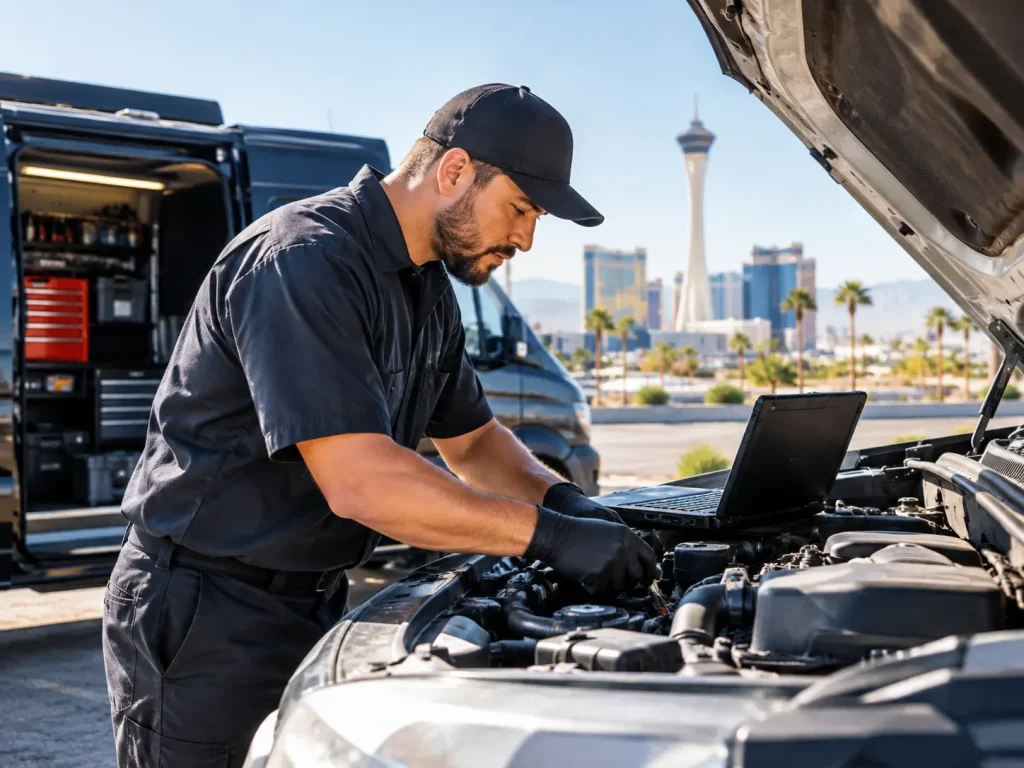
El Paso summers do not ease in gently. Triple digit afternoons, blazing sun, and pavement that radiates heat long after dark push every part of your car to its limits. Heat is one of the biggest causes of breakdowns, and it works quietly, wearing down batteries, belts, hoses, tires, and fluids until something finally gives out at the worst possible moment. This guide shares practical car care tips for El Paso drivers, explains what extreme heat does to a vehicle, and walks through the checks that help you avoid heat damage and stay on the road all summer.
What Extreme Heat Does to Your Car
Your car is built to handle high temperatures, but there is a limit to how much stress it can take over time. Heat affects a vehicle in several ways at once:
- Engines run hotter, which puts extra demand on the cooling system
- Batteries lose fluid and wear out faster, because heat speeds up the chemical reactions inside
- Rubber parts such as belts, hoses, and seals dry out, harden, and crack
- Tire pressure rises, and old or underinflated tires are more likely to fail
- Fluids break down sooner, including engine oil, coolant, and brake fluid
- Paint, plastic, and upholstery fade, crack, and warp under constant sun
- The air conditioning system works harder and can lose cooling performance
Our article on desert dust and heat and keeping your car running in El Paso covers how the local climate, including dust, affects your engine and filters. This guide focuses on the heat itself and the habits that protect your car from it.
Tip One: Keep the Cooling System in Top Shape
The cooling system is your engine’s main defense against heat, so it deserves the most attention in summer. A system that works fine in mild weather can fall behind when it is 105 degrees and you are sitting in traffic.
- Check the coolant level only when the engine is completely cool, and top it off with the type your owner’s manual specifies
- Have the coolant tested and replaced at the interval your manual recommends
- Look at hoses for cracks, bulges, or soft spots, and at the clamps for signs of leaking
- Check the radiator for debris or damage, and the fan for proper operation
- Look under the car for drips or puddles after it has been parked
- Watch the temperature gauge, especially in slow traffic and on long climbs
If the gauge climbs toward the red or you see steam, pull over safely and turn off the engine. Never open the radiator or coolant cap while the engine is hot, because the system is under pressure and can release scalding fluid. Let it cool completely before checking anything.
Tip Two: Test the Battery Before It Fails
Many people think cold weather is what kills batteries, but heat is often the real culprit. High temperatures speed up internal wear, and the damage shows up later, when the battery suddenly will not start the car. A battery that is three or more years old deserves a test before summer reaches its peak. Look at the terminals for white, blue, or green crust, and make sure the cables are tight. If your engine has been cranking slowly, do not wait. If you ever get stuck, our guide to the top 10 reasons your car won’t start and how to get back on the road explains the most common causes, and a weak battery tops the list.
Tip Three: Take Tires Seriously
Hot pavement is hard on tires. Air expands as it heats, so pressure climbs during a drive, and tires that are underinflated, worn, or old are far more likely to fail at highway speed. To protect them:
- Check pressure when the tires are cold, using the number on the driver’s door jamb sticker and not the number on the tire sidewall
- Do not release air from a hot tire because the pressure looks high, since it will drop as the tire cools
- Inspect the tread depth and look for cracks, bulges, or cuts on the sidewalls
- Check the age of your tires, since rubber hardens over time even when tread looks fine
- Make sure the spare is properly inflated, and that the jack and lug wrench are in the car
Tip Four: Keep the Air Conditioning Healthy
In El Paso, air conditioning is a necessity, not a luxury. If the air coming out of your vents is weaker or warmer than it used to be, do not wait until the hottest week to get it looked at. Causes can include low refrigerant from a leak, a failing compressor, a clogged cabin air filter, or a cooling fan that is not working. A clogged cabin filter is a simple fix that many people overlook. Some air conditioning repairs require specialized equipment, so a technician will tell you what can be handled on site and what may need a shop.
Tip Five: Check Belts, Hoses, and Wipers
Rubber suffers in the heat. Belts can glaze and crack, hoses can swell or harden, and wiper blades can dry out and tear. Have a technician inspect the belts and hoses at least once a year, and listen for squealing when you start the car or turn on the air conditioning. Replace wiper blades that streak or chatter, since a sudden summer storm can leave you with poor visibility if they are worn.
Tip Six: Stay on Top of Fluids
Heat makes fluids work harder and break down faster. Check these regularly:
- Engine oil, for level and condition, and change it on schedule or sooner if you do a lot of stop and go driving
- Coolant, as described above
- Brake fluid, which can absorb moisture and lose effectiveness over time
- Transmission fluid, if your car has a way to check it, or ask a technician to look
- Power steering fluid, if your car uses it
- Windshield washer fluid, which you will use often to clear dust
Tip Seven: Protect the Outside and Inside From the Sun
Sun exposure fades paint, cracks dashboards, and dries out leather and plastic. A few habits help a great deal:
- Park in a garage, carport, or shade whenever you can
- Use a windshield sunshade to reduce interior temperatures
- Wash and wax the paint regularly so it has a protective layer
- Apply a protectant made for interior surfaces, following the product directions
- Consider window tint, where it is legal, to cut down on heat and glare
- Use seat covers or towels on hot upholstery and be careful with seat belt buckles that can get hot enough to burn
Tip Eight: Never Leave Children or Pets in a Parked Car
This is not a maintenance tip, but it may be the most important one. The inside of a parked car can reach dangerous temperatures within minutes, even on a day that does not feel extreme, and cracking a window does not make it safe. Never leave a child or a pet in a parked vehicle, not even for a quick errand. Also check the back seat every time you leave the car, so no one is forgotten.
Tip Nine: Pack a Summer Emergency Kit
If you break down in the desert heat, being prepared can make a serious difference. Keep these items in your car:
- Plenty of drinking water for everyone in the car
- A phone charger or battery pack
- Jumper cables or a portable jump starter
- A tire inflator and basic tools
- A flashlight with fresh batteries
- A sun hat, sunscreen, and light protective clothing
- A reflective warning triangle or flares
- Extra coolant of the type your car uses
If your car stops running on a hot day, stay with the vehicle if it is safe to do so, move to the shade if you can, keep your hazard lights on, and call for help. If you are on a highway, get as far off the road as you safely can.
Tip Ten: Schedule a Pre Summer Inspection
The best defense against heat damage is catching problems early. A full inspection before summer lets a technician look at the battery, cooling system, belts, hoses, tires, brakes, fluids, and air conditioning, and give you a written list of anything that needs attention. Fixing a small issue in spring is almost always cheaper and less stressful than dealing with a breakdown in July.
Warning Signs of Heat Trouble
- The temperature gauge rising above its normal position
- A sweet or syrupy smell, which can point to a coolant leak
- Steam coming from under the hood
- Slow engine cranking or a clicking sound when you try to start
- Air conditioning that blows warm or weak air
- Squealing or chirping belts
- A tire pressure warning light
- Fluid spots under the car
Do not ignore these signs. Heat turns small problems into big ones quickly.
Can a Mobile Mechanic Help With Heat Related Car Care?
Yes, in many cases. A mobile mechanic can come to your home or workplace in the El Paso area, test your battery, inspect the cooling system, check belts and hoses, look over your tires and fluids, and handle many common repairs on the spot. That means no waiting around at a shop in the middle of a hot day. Some jobs, such as certain air conditioning repairs or major engine work, may need the equipment of a full shop, and a trustworthy technician will tell you honestly when that is the case. When you book, describe any symptoms you have noticed, such as overheating, slow starts, or weak air conditioning, so the technician knows where to begin.
Stay Ahead of the Heat
You cannot change the El Paso weather, but you can prepare your car for it. Keep the cooling system healthy, test the battery, watch your tires, protect the interior, and have a technician take a look before the hottest months arrive. A little care now helps you avoid heat damage and keeps your summer plans moving.
To learn more about our services, visit our homepage. If you would like your car inspected before the heat gets worse, reach out through our contact us page and we will come to you anywhere in the El Paso area.